ADVERTISEMENT
The afternoon sun was still high over Stockton, casting long, golden shadows across a quiet residential street that, only moments before, had been filled with the joyous, chaotic energy of a child’s birthday party. In an instant, that suburban peace was shattered by a rhythmic, metallic staccato that had no place among the balloons and streamers. By the time the first police units screeched to a halt and officers pushed through the front door, the scene of the celebration had been transformed into something unrecognizable—a domestic tableau of absolute horror.
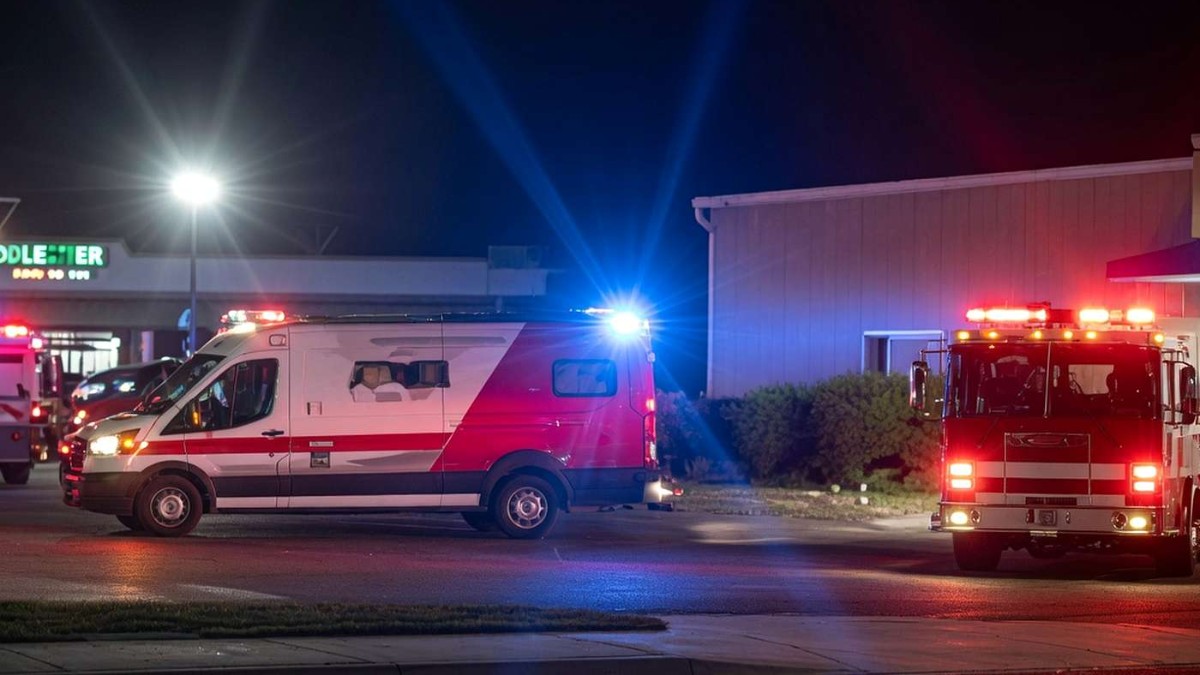
Many stared with hollow, unblinking eyes at the house they had just fled—the very place where, minutes earlier, they had been joined in a chorus of singing and laughter. The neighborhood was now a cacophony of emergency response. Sirens wailed with a mournful persistence, and the rhythmic, strobing pulse of red and blue lights washed over the faces of those who remained. Yet, despite the mechanical noise of the city’s response, nothing could drown out the raw, primal cries of those who were slowly coming to the realization that someone they loved—a child, a friend, a neighbor—was not among the survivors.
Investigation and Impact
In the grueling days and weeks that will follow, the professional machinery of the justice system will begin its work. Detectives in windbreakers will methodically trace the trajectories of the bullet paths through the drywall and furniture. Technicians will labor over grainy doorbell camera footage, and analysts will reconstruct the timeline of the tragedy second by agonizing second. They will count the shell casings, document the entry points, and categorize the carnage. But for the people of this Stockton neighborhood, the forensic details are a secondary concern. For them, the damage is already permanent, carved into the collective memory of the block with a cruelty that time will struggle to erode.
Community Reckoning
As the news of the four deceased and ten injured ripples through the city, the community is left to grapple with a profound sense of violation. This was not a clash on a distant battlefield or a conflict in a dark alleyway; it was an assault on the sanctity of the home and the innocence of childhood. The physical wounds of the survivors may eventually heal into scars, but the psychological impact on the witnesses is a burden that will be carried for a lifetime. Neighbors who once waved to each other across fences now look at their surroundings with a newfound suspicion, the familiar geometry of their street forever altered by the knowledge of what occurred on that lawn.
The tragedy in Stockton is a stark, bloody reminder of the fragility of the peace we often take for granted. It highlights a recurring American nightmare where the most mundane and joyful gatherings are transformed into sites of mass casualties. In the wake of the shooting, the usual debates regarding public safety, gun legislation, and community policing will inevitably resurface, fueled by the grief and anger of a city in mourning. However, for the families sitting in the dark of their living rooms tonight, the political discourse feels far away. Their reality is the empty seat at the table and the haunting echoes of a song that was never finished.
Road to Recovery
Investigators will eventually provide a motive, a name, and a series of facts to explain the “how” and the “who,” but the “why” will likely remain out of reach. There is no logic that can justify the introduction of a firearm into a room full of children. As the community begins the long, arduous process of burying its dead and tending to its wounded, it faces a communal reckoning. This event has marked them, creating a “before” and an “after” that will define the history of this street for generations. The birthday candles were never blown out, but a light in this community has been extinguished, leaving behind a darkness that can only be navigated with the support of those who shared the experience.
ADVERTISEMENT
